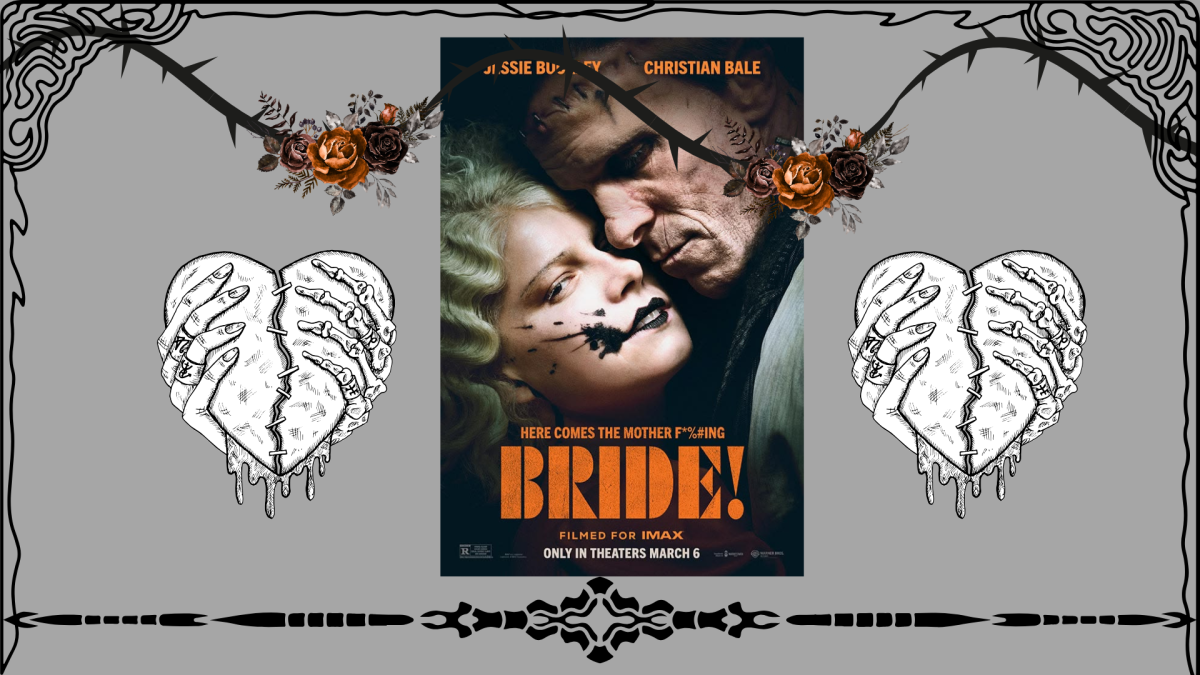
Considering the amount of Frankenstein adaptations there are, it’s about time “The Bride of Frankenstein” gets a chance to shine. In 2026, a reimagining from director Maggie Gyllenhaal was released. The film is titled “The Bride” and to say it’s an accurate portrayal of the original novel is a lie.
Before the film was released, Gyllenhaal spoke about the inherent lack of agency the bride has in her own story speaking for Entertainment Weekly. “She’s still formidable, but I thought there’s a problem with this concept. It’s called the Bride of Frankenstein, but it’s really Frankenstein. So, who is she?” Gyllenhaal inquired.
On paper, this idea is brilliant paired with the 1930s Chicago setting, the punk-rock aesthetic, the brilliant cast of actors including the likes of Jessie Buckley as The Bride and Christian Bale as Frankenstein. The film had so much potential to be an intelligent deconstruction of a classic film and character with commentary on female rage and discovering self identity.
Unfortunately, despite Gyllenhaal’s strong vision and concept, “The Bride” fails to live up to its potential.
Despite the title, the bride is so decentered from a movie about her. While Jessie Buckley gives an electric performance, the film does not give her a standout moment to showcase the character; meanwhile, Christian Bale, who also gives a wonderful performance, is given more development and backstory.
The film sets up a mystery about discovering the back story of the bride but is softly dropped with an unsatisfactory amount of information that is explained by characters who get killed in the same scene making her backstory in a movie that is supposed to be about her useless.
In comparison, Frank is given a far more rich characterization filled with over 100 years of loneliness and desire for companionship that drives his actions and motivations for his relationship with The Bride. Although the actions he takes are not justified (grave digging bringing a woman back to life, and lying to said woman about her past), the audience is going to be sympathetic to him by nature.
For a film that is supposed to be about female rage and getting revenge on men that wronged her, the ultimate reveal of Frank’s lies is not a strong enough moment for The bride. Given what minimal knowledge we have on her character, she should have been angrier at him and had a full angry breakdown. This would have been more impactful than an anticlimactic scene of her forgiving him.
The lack of trigger warnings takes the cake for the the largest issue of the film it’s distressing content, “The Bride” contains two sexual assault scenes that are shown in graphic detail. In test cuts of the film, there were more scenes of graphic sexual violence shown to which the studio requested that Gyllenhaal remove the scenes from the film as they felt it was excessive. “I had a couple of women say, ‘I don’t want to see a woman being violated.’ And I think, I also don’t want to see that. And yet that is a major reality in the culture that we’re living in — just in the time I was cutting this movie, how much wildly disturbing brutality against women there has been in the world. And so if we’re going to see it, we need to see it in a way that is very hard to watch, because it is very awful. And if you know anything about me, if you looked at any of my work, even starting with ‘Secretary’ when I was 22, this is something that I’ve spent a lot of time thinking about. I am sure that I have been thoughtful about this particular subject, and yet it will be hard to watch. I think we can take it,” stated director Maggie Gyllenhaal.
While Gyllenhaal’s intent is not malicious, there is another side that is not being considered. Films about sexual assault can exist with out showing the act in question. For example, “Sorry Baby,”, a film released last year, masterfully implies the assault by not showing it. The film is not focused on what happened but how it affects the victim and their life moving forward.
Gyllenhaal did not need to show the scenes in order for sexual violence to be apart of her story. All things considered with the scenes being kept in, a trigger warning needs to be issued as “The Bride” is being primarily marketed to women who have been assaulted. Experiencing a traumatic event on screen can be detrimental to someone psychologically and watching a film is not worth that trigger.
That is not the only content warning “The Bride” fails to provide, early in the film there is a prolonged sequence of strobe lights which can be harmful to someone with epilepsy. Not having a warning for this is beyond irresponsible on behalf of the filmmakers and theater and it is extremely dangerous to not make someone who has epilepsy aware of this as having a seizure can be deadly to the person it is affecting.
Maggie Gyllenhaal is a director who has a strong vision and creative ideas, but the weakness lies in the execution of those ideas. On paper “The Bride” could have been an incredible film, but fails to live up to its immense potential resulting in a messy and bloated product that wastes its talented cast.