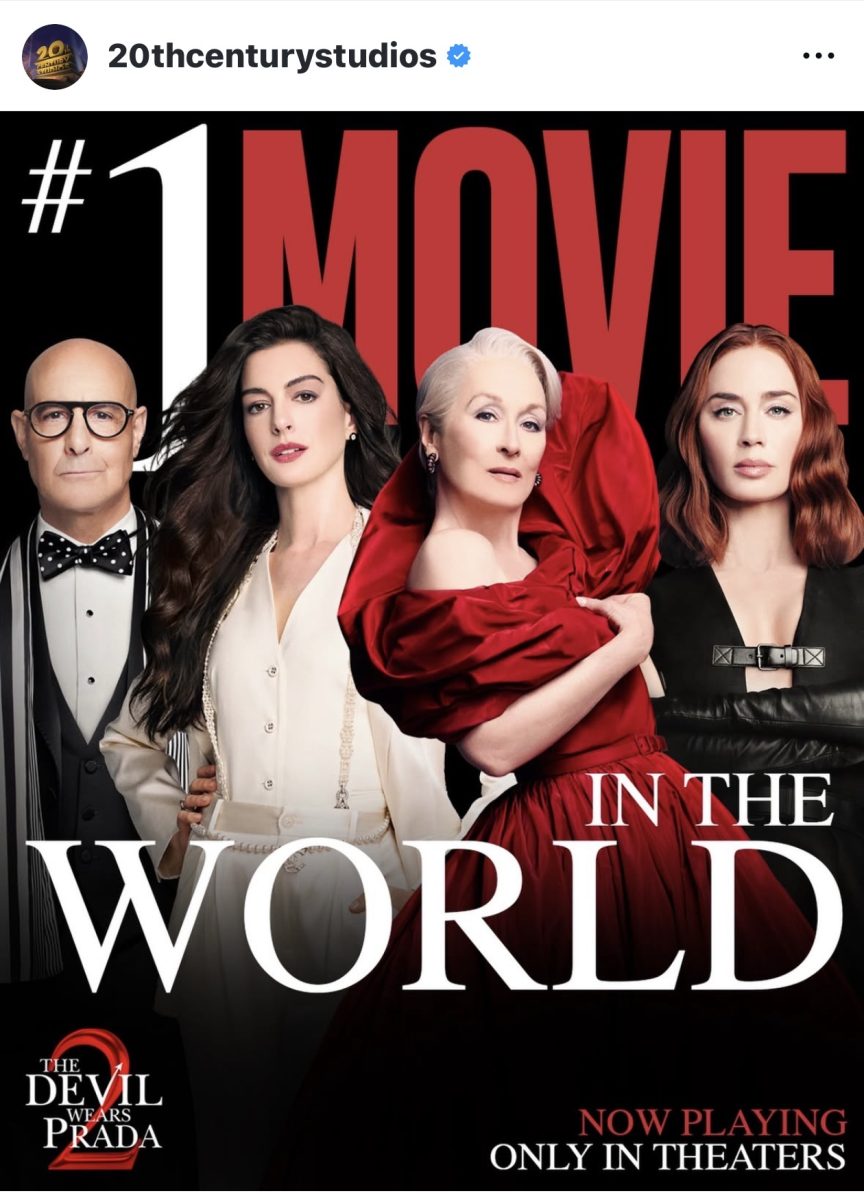
On May 1, 2026, audiences were treated to the long awaited sequel to the classic 2006 film “The Devil Wears Prada.” The film has emerged amid a recent trend of legacy sequels, or sequels made decades after the original film. This trend, which can be sourced from the success of 2022’s “Top Gun Maverick,” proved that even after twenty years audiences still cared to show up to the theater to relive the nostalgia of the previous film.
Unfortunately, not all of the legacy sequels that have followed “Top Gun Maverick” have all understood why that film worked. The ingredients to make a good legacy sequel are the following: First, it must keep the elements that made the original good. Second, it must continue the story in an interesting way that allows the pre-existing characters to grow without rehashing the plot of the first film, and finally, it does not rely on the nostalgia of the audience in order to mask the lack of effort put in. Now that begs the question, does “The Devil Wears Prada 2” work as a legacy sequel?
The film picks up two decades after the original film with Andy coming back to Runway after the magazine endures a major scandal. Her return leads to a faceoff against Miranda Priestly’s former assistant, Emily. The film has a balance between honoring the nostalgia of the original film while adding in modern commentary on journalism and the current state of the fashion industry.
The added commentary naturally fits as the film questions where print magazines fit within the current fashion industry, and if they can evolve beyond traditional print.
Miranda is still the perfectionist she is from the first movie, but there is an added sympathy towards her character as she is fighting to keep her life’s work while not having much agency in what direction the company is going.
The other characters are similarly fleshed out. Andy retains her growth from the first film; she is more confident and established as a writer, but still makes mistakes and tries her best amidst all the stress she is put under.
While previously established characters are given rich characterization, the same cannot be said for the new characters. For example, Miranda’s new assistant Imani, played by Simone Ashley, is practically useless. All she does is make deadpan comments that get laughs from the audience. Other than that, she serves no purpose to the plot. If she was removed from the film, nothing would change. It’s rather strange that the care the writers show towards the established characters does not extend to new characters which begs the question if new characters should have been added at all. While it is okay for a side character to not have a dynamic and complex arc, they should still have a reason to exist in the story which cannot be said for the new characters in “The Devil Wears Prada 2.”
The plot, while it does not rehash the story of the first film and is quite enjoyable to follow, struggles to follow through on certain storylines in order to focus on the main story. In screenwriting, the main story should take priority, but it does not mean subplots need to be abandoned with little to no conclusion. “The Devil Wears Prada 2” has many ideas for what they want to put in the story, but they do not know how to cut in between those subplots and the main story, making the film feel slightly overstuffed.
In conclusion, while flawed and overstuffed, “The Devil Wears Prada 2” is an entertaining sequel that will satisfy fans of the original.