
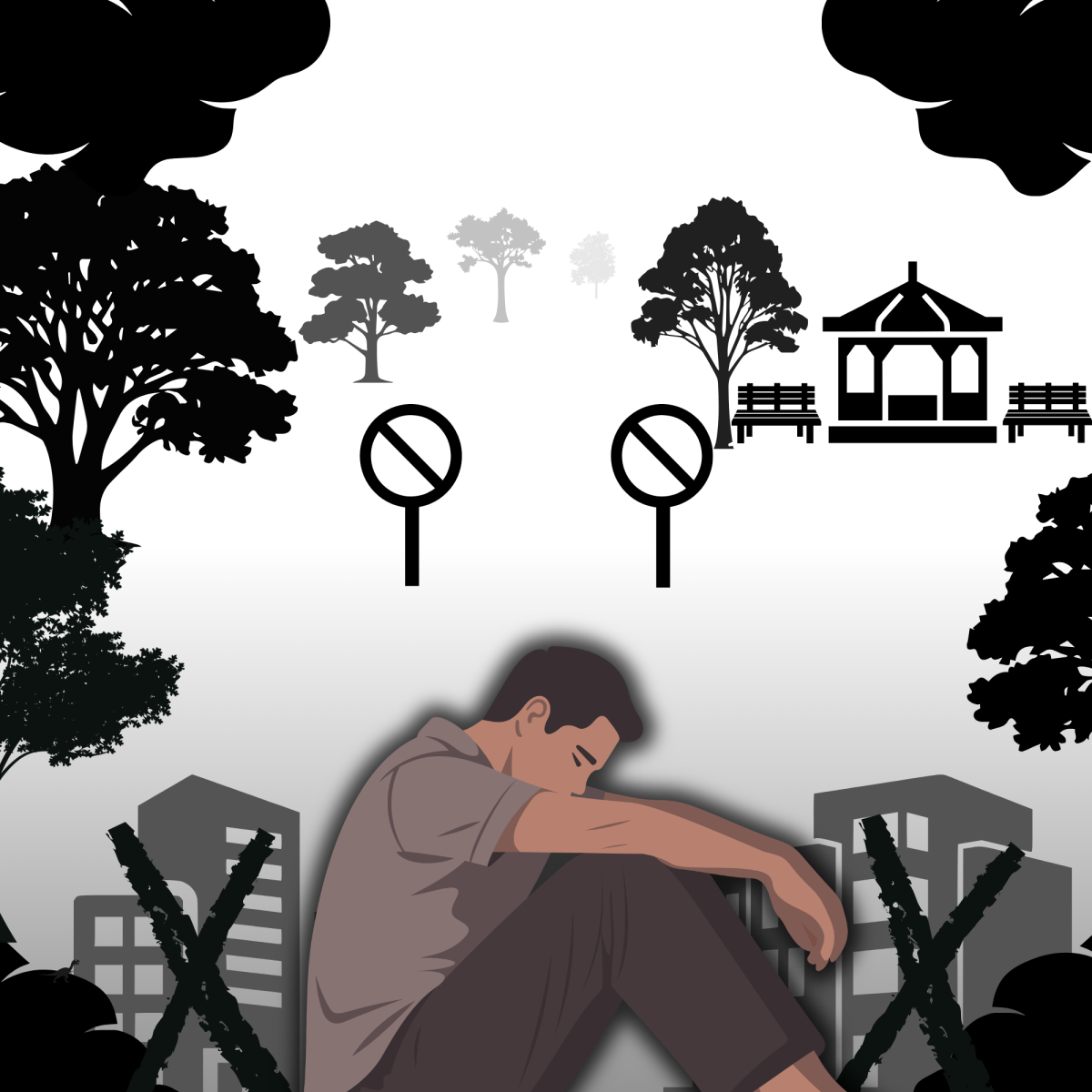
In almost every classroom, there’s a recurring moment: a teacher asks a question, most students know the answer, but the room stays quiet and no one raises their hand. Eventually, the teacher sighs and calls on someone anyway, frustrated that no one is participating. But the issue isn’t usually that students don’t know the material; it’s that many are too anxious to speak up.
That hesitation is often treated as a personal issue, but it may actually point to something larger happening outside the classroom. In sociology, there’s a concept called “third places,” which refers to spaces outside of home and school that are cheap or free where people can casually gather, talk and build relationships. These can include parks, libraries, malls, diners or any low-pressure environment where social interaction happens naturally.
For past generations, these places were everywhere. Ask your parents, and they’ll give you a laundry list of places they used to hang out: roller rinks, malls, local diners, under-21 clubs, parks and even just neighborhood hangouts. That loss may be contributing to why many students feel less comfortable speaking, connecting and participating, even in familiar settings like school.
Now, those options are disappearing. Newer generations don’t have or don’t have access to, places to just hang out.
Take Orland Mall, for example. On Fridays and Saturdays, minors have to be accompanied by an adult after 3 p.m. just to enter the mall. That restriction hits at the worst possible time, because for most students, weekends, especially Friday and Saturday afternoons and evenings, are the only times they’re actually free from school, homework, sports or jobs. When access to public spaces is limited during the only hours teens can realistically socialize, it doesn’t just reduce where they go, it reduces whether they can go anywhere at all.
Even public spaces that are supposed to be open to everyone aren’t always realistic options. Parks, for example, are often seen as one of the last free places teens can go, but most close at dusk. Depending on the time of year, that can be as early as late afternoon, right when students are just getting out of school or finishing activities. By the time homework is done, or schedules clear up, those spaces are already off-limits.
It’s not that there are absolutely no places for teens to go, but the options that do exist are often limited or overlooked. Recreational centers, for example, are one of the few spaces that are still relatively affordable and accessible for younger people. Many offer gyms, open courts and spaces where teens can gather, talk or play sports without needing to spend much money.
In theory, places like these could function as modern “third places,” giving teens a space to socialize outside of home and school. However, they are often underused or not designed specifically for casual, everyday hanging out, which limits how naturally teens can interact there. As a result, even when spaces exist, they don’t fully replace the kind of informal, unstructured environments that earlier generations had.
Technology has also changed what socializing looks like for this generation, often in ways that make it feel like connection is happening when it really isn’t. Apps like TikTok and Instagram allow teens to constantly interact with others through messages, comments and shared content, creating the impression of being socially active.
However, these interactions lack face-to-face interaction. People need to learn how to read body language, handle awkward moments and build deeper relationships. At the same time, technology has made it nearly impossible to be bored. With endless entertainment always available, there’s less motivation to go out and find something to do or someone to see. In the past, boredom often pushed people to leave their homes and socialize; now, it’s easily avoided, which can reduce how often real, in-person connections happen.
Even places that used to be reliable hangout spots, like fast food restaurants, are becoming less accessible to teens. At many schools including Lockport, especially after events like football games, groups of students will head to places like McDonald’s or Starbucks, only to find the dining areas closed or restricted specifically to keep teenagers out.
Some businesses won’t allow teens to enter at all without an adult, while others enforce strict rules that require every person to make a purchase and limit how long they can stay. In the past, these spaces were more flexible, people could buy something small, share food with friends or even just sit and talk for hours without being forced to leave. Now, with stricter policies and a growing “no loitering” culture, even casual, low-cost places to gather are disappearing, leaving teens with fewer and fewer options for simply spending time together.
Another major factor affecting teen socialization is the increasing level of parental monitoring and responsibility. With the rise of location-sharing apps like Life360, many parents are able to track their children’s movements in real time, making spontaneous or unsupervised hanging out less common.
At the same time, modern laws and liability concerns have made hosting teen gatherings more complicated in general. In many places, parents can be held responsible if anything goes wrong during a party at their home,whether that involves underage drinking, property damage or someone getting injured, simply because they are the supervising adult. Because of this, some parents are more hesitant to allow large groups of teens to gather at their house at all. Combined, these factors can unintentionally reduce opportunities for unsupervised social interaction, which has traditionally been an important part of how teens build independence and friendships.
The lack of third places doesn’t just change where teens spend time; it also affects how they develop socially and emotionally. Without regular, low-pressure environments to interact with others, it becomes harder for young people to build basic social skills like starting conversations, reading social cues or navigating awkward interactions. These are skills that are typically learned through repeated, casual face-to-face experiences, not structured settings like school.
As those opportunities decrease, many teens report higher levels of social anxiety and discomfort in everyday interactions. At the same time, the absence of shared spaces where people naturally gather can create a sense of isolation or disconnection, where teens feel like they don’t fully belong anywhere outside of a screen.
Research on third places also suggests that these environments play an important role in reducing feelings of loneliness and supporting overall mental well-being by creating a sense of community and belonging. When those spaces disappear, it’s not just social habits that change, it can also contribute to rising rates of anxiety and depression among young people.
The effects of fewer third places don’t stop in high school, they often show up later in college and the workplace. Many students entering college report feeling unprepared for the social side of campus life, where building friendships and navigating new environments requires confidence and communication skills.
Without those skills, some students struggle to adjust, which can contribute to feelings of isolation, increased anxiety and in some cases, transferring schools or leaving during their first year. In the professional world, similar challenges appear in different forms. Workplaces rely heavily on teamwork, communication and basic interpersonal “soft skills,” yet these abilities are often developed through years of casual, in-person social interaction.
When those early opportunities are limited, some young adults may find it more difficult to collaborate effectively, advocate for themselves or adapt to group environments. As a result, the lack of informal social spaces during adolescence can have long-term consequences that extend well beyond the teenage years.
However, this trend is not irreversible. Communities can still create and support spaces where teens are welcome to gather, whether that means recreational centers, public libraries, parks with accessible hours or local cafés that allow students to sit and socialize without pressure to constantly spend money.
Some examples might include Dellwood Park and the Dellwood Park Community Center, Heritage Park and newer spaces like Plot Twist Books in Lockport, where people can hang out, read and socialize for free. Even small efforts to make existing spaces more teen-friendly can help rebuild opportunities for in-person connection. While the disappearance of third places presents a real challenge, recognizing their importance is the first step toward bringing them back in a way that supports the next generation.







Randal Torres • May 28, 2026 at 9:47 am
Ayyy I made that picture, nice article though.