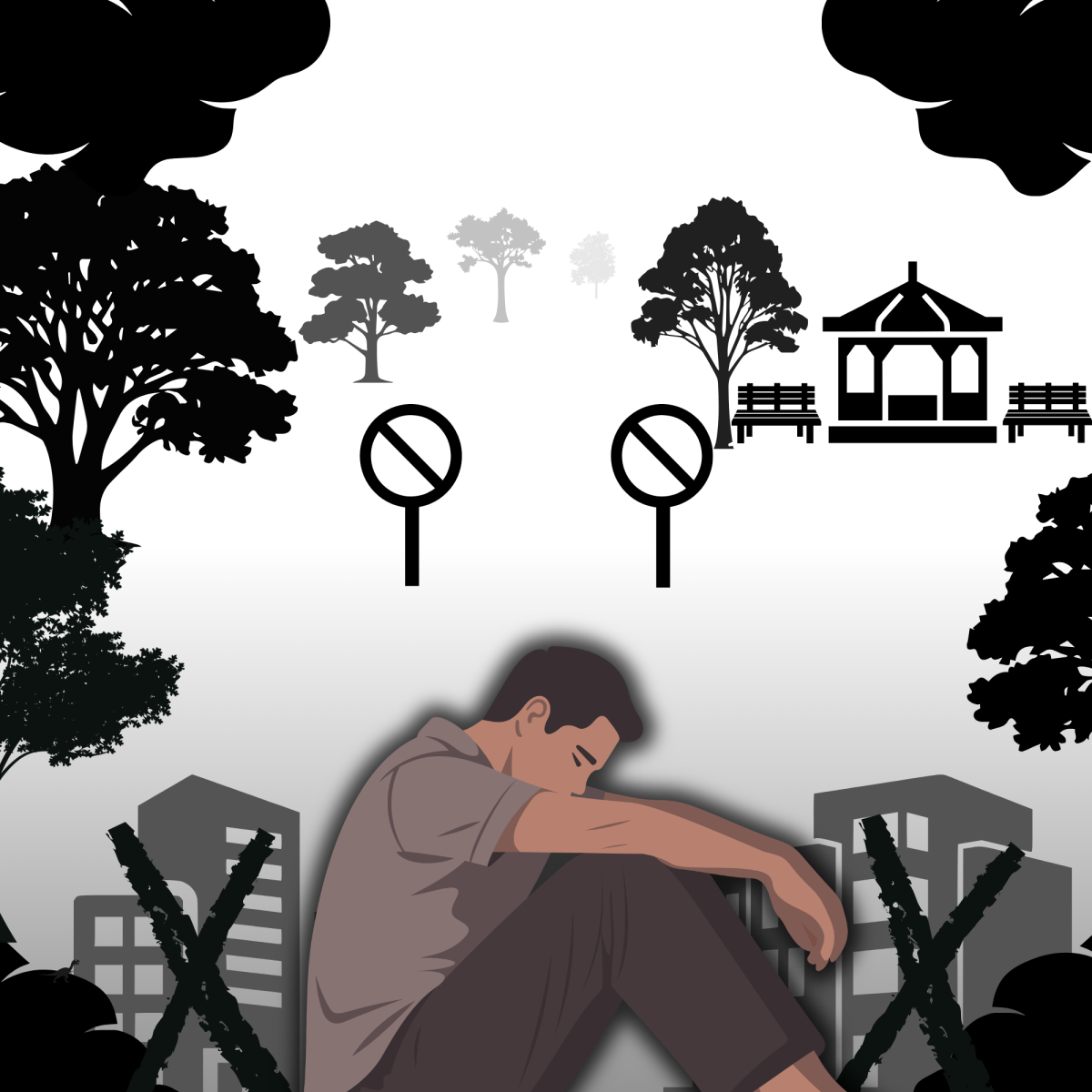

“Just use ChatGPT, that’s what I always do” is a typical response students hear every day in the classroom. Artificial intelligence seems to be everywhere these days, in school, on our phones and even built into the tools we use to learn. It’s easy to hear about all the ways AI can help: saving time, simplifying complex problems and even boosting creativity. But what’s often left out of the conversation are the downsides, especially from a student’s perspective.
While AI has its advantages, some students worry it’s changing how we think and create. “While I do think that AI could be useful for things more geared towards STEM, like evaluating equations or debugging code, I think it takes value away from the arts and humanities simply because we don’t need it. You can’t teach AI to be creative the same way a person learns creativity,” said senior Kennedy Reichman.
That idea rings true for a lot of students. When AI starts doing creative work, writing essays, designing art or brainstorming projects, it can make it harder for students to develop their own voice. Creativity isn’t just about getting something done; it’s about learning how to express yourself, make mistakes and grow from them.
“Use AI for complex tasks but not for daily use,” senior Sadal AlFaqeeh summed up simply. That’s a balance many students are struggling with. AI can be a great study tool, but when it becomes the go-to for everything, it can easily make people lazy. It’s tempting just to type in a prompt and get an answer in seconds, but that takes away the actual process of learning. It’s like skipping to the end of a puzzle; you might see the final picture, but you miss out on the challenge that teaches you something.
“It’s scary how much we are starting to rely on AI for everything. So many people are losing the ability to think things through for themselves since they just rely on AI to give them the answer,” said senior Halle Spasovski.
Even teachers are starting to use AI in their classrooms, raising questions about how much is too much. In one of my classes, my teacher included a link under “materials” titled “AI Help.” It leads to a page of prompts students can use in Gemini to study for the class. While it’s meant to be helpful, it feels strange that learning is now being filtered through a chatbot instead of direct understanding. In another class, my English teacher actually required us to use AI to make a creative slide. It was interesting, but it also felt like it took away from the personal effort the project was supposed to show.
Another big downside of AI is accuracy, or lack thereof. Sometimes, AI just gets things wrong. For example, Google recently replaced its quick “answer boxes” with AI Overviews that try to summarize results. But those summaries aren’t always right. There was even a trend on TikTok where people looked up “Is it 2025?” and Google’s AI responded, “No,” even though it actually was 2025. It sounds funny, but it shows how unreliable these tools can be. Instead of getting a clear, factual answer, you get a confident-sounding response that might not be true at all.
Beyond schoolwork and search engines, there’s also the scary side of AI, how it can be used to create fake videos and images of real people. Some of these “AI deepfakes” look so realistic that it’s hard to tell what’s real and what’s not. That’s dangerous because anyone’s face or voice could be used without their permission. It can ruin reputations or spread false information, and it’s only getting more convincing over time.
Honestly, it feels like AI has already gone far enough. We have what we need for studying, creativity and problem-solving, but we don’t need to keep pushing it further. The more it develops, the more risks there seem to be. Maybe instead of trying to make AI smarter, we should focus on how to use what we already have responsibly.
AI can be a powerful tool, but it shouldn’t replace the human element of learning and creativity, or cross the line into something harmful. Schools are supposed to teach students how to think critically and independently, not how to rely on machines to think for them. It’s up to us, students, teachers and creators, to decide how far we really want AI to go. If we forget how to think for ourselves, then the smartest technology in the world won’t really make us any smarter.