
In 1816, Mary Shelley made a bet with two friends, Lord Bryon and Percy Shelley, to write a ghost story. In the days that followed, Shelley had a recurring nightmare of a student being horrified by his creation, a man similar to patchwork assembled of body parts stitched together. Along with this dream, Shelley drew inspiration from her experience with loss as her attempts to have children were unsuccessful. She wanted to highlight the consequences of human beings trying to play god. Thus, “Frankenstein,” the novel, was born.
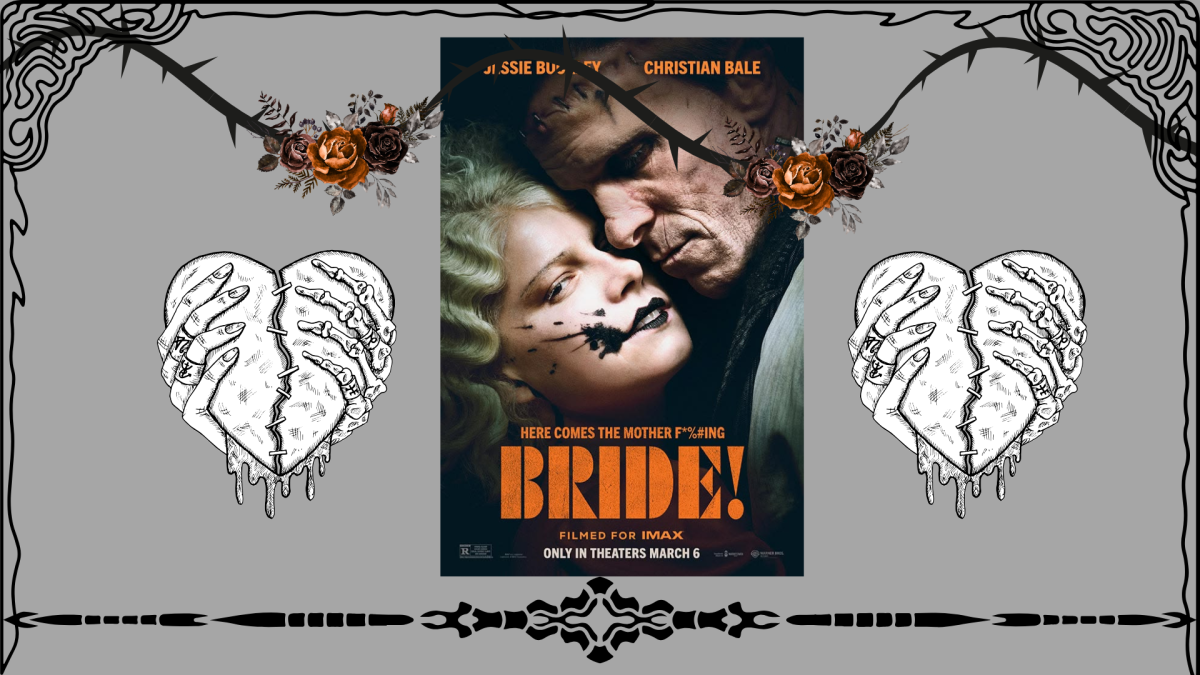
Since the novel’s publication, it has been adapted over 400 times with the most recent adaptation came out on Netflix on Nov. 7. With all of these adaptations, how has the story been changed over the years?
The answer is quite complex. Frankenstein has evolved beyond its source to the point where various plot points and details that were never in the novel have become standard for adaptations of “Frankenstein.” This mainly has to do with the 1932 adaption, the film that created many of the common tropes audiences associate with Frankenstein such as the creature being brought to life by lightning, or the creature being green with bolts in the side of his neck. When in the novel, the nature of how the creature was brought to life is rather vague implied to an unspecified scientific process.
The creature’s appearance is described in chapter 5 of the novel as “his yellow skin scarcely covered the work of muscles and arteries beneath; his hair was of a lustrous black and flowing; his teeth of a pearly whiteness; but these luxuriances only formed a more horrid contrast with his watery eyes.” None of the Frankenstein adaptations that I have seen have matched the book description, the closest being the recent outing by acclaimed director Guilimero Del Toro.
However, the new film leans towards a humanizing tone towards the creature’s design by making him look human-like. Making his skin pale white rather than the yellow tone described in the novel. The detailing on his skin is also not how Shelley described. Del Toro instead went for a patchwork design to emphasize the nature in which the creature was created rather than a display of muscles and arteries that was described. The point of the creature’s appearance is that Victor Frankenstein put together the body parts to give the creature an otherworldly kind of beauty. The result; however, ends up being a distorted and grotesque vision that he did not desire causing his immediate rejection of the creature. While many adaptations do not get the appearance of the creature correct, different interpretations allow for the story to take a new meaning.
Considering all of the standards that are expected of adaptations of “Frankenstein” the idea of getting a fully accurate adaptation of the novel in the future is not plausible, but it leaves room for new and exciting works from various filmmakers that will continue to evolve the story. As is the case with Guillermo Del Toro’s adaptation, which while not fully accurate to the novel, takes a new approach to the story exploring a different lens, father-son relationships and generational trauma. The novel does incorporate themes of this nature, but Del Toro takes it a step further by changing aspects of the source material to fit within this vision.
The result is a beautiful, gothic masterpiece that highlights the themes mentioned while also staying true to the novel’s ideas of humans playing god that culminates in a devastating ending that is most likely to bring tears to the audience.