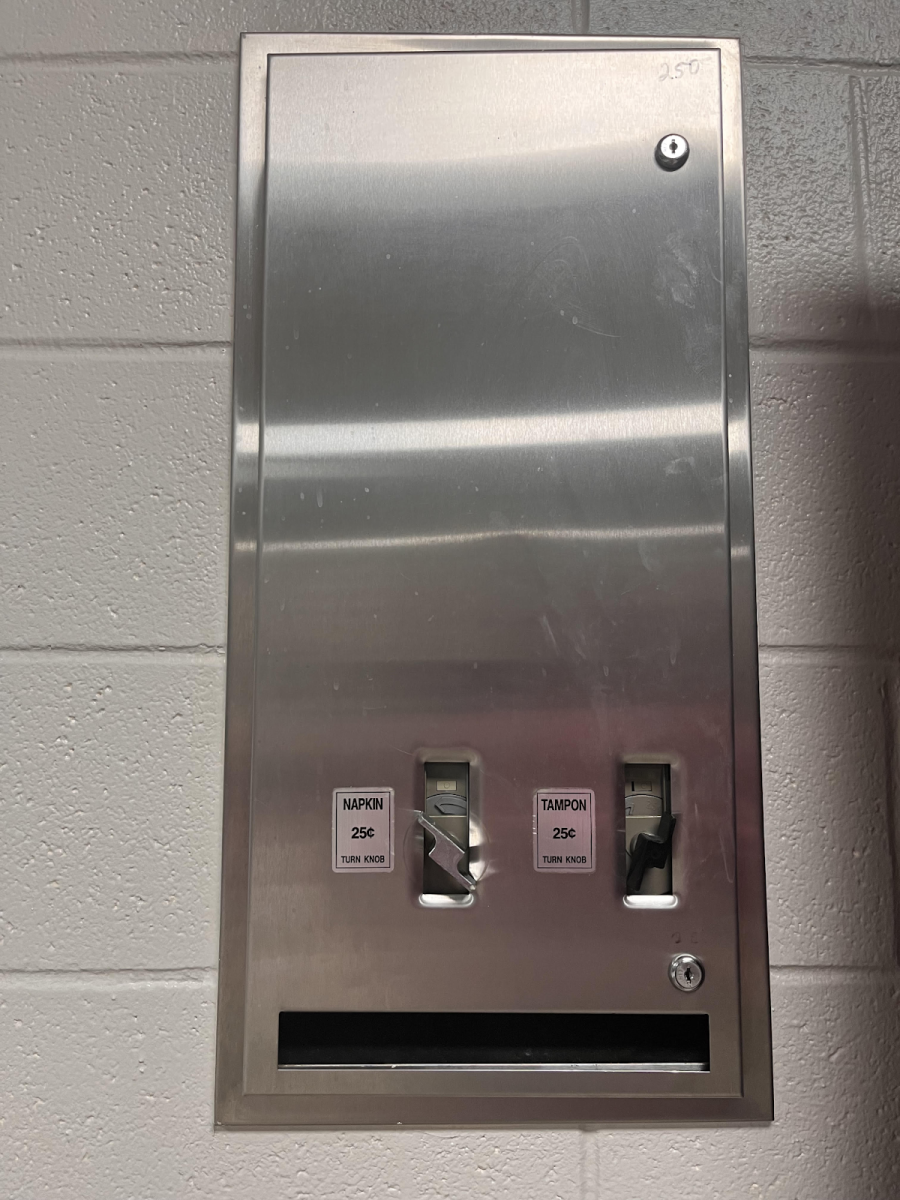
Female students of Lockport Township High School may be surprised to learn that it has been illegal for Illinois public schools not to provide free feminine hygiene products in restrooms since August 2021, when Governor Pritzker signed House Bill 156 into law.
Furthermore, House Bill 156 was simply an update to a similar law from 2017, necessary because there were some schools not in compliance with the previous regulations. Ironic, then, that over four years since House Bill 156, and seven since the original law, LTHS is still acting in opposition to the requirements of the government.
Numerous people at both East and Central Campus who use the female restrooms report that the issue has affected them and at times negatively impacted their ability to learn, leading them to stress about acquiring products that should be provided in every bathroom.
Students already face great stigma regarding menstrual health, and combating the taboo around the topic is an ongoing battle—part of the reason that this problem at LTHS exists is because students are afraid or embarrassed to speak up. “How am I supposed to stay focused on my education when they are constantly more concerned about meeting their basic need for menstrual products?” one LTHS junior asks.
LTHS, however, is not the only school in misalignment with the requirements of the law. Other schools, many in the Illinois area, are also neglecting their female students by failing to provide free and abundant feminine hygiene products. Students cite issues such as insufficient restocking of the dispensers, being made to pay for their products, having to trek all the way to the nurse’s office for them, or not even having them at all.
This can become an even more serious issue when students already face period poverty, and rely on public spaces like schools to get the necessities. Even the law recognizes that is the reality for many. Section 105 ILCS 5/10-20.63 reads: “Access to menstrual hygiene products is a serious and ongoing need in this state.”
In Dec. 2022, Champaign, Illinois schools were called to action in an article about the frustrating situation, where one parents notably says, “And it’s just, it’s so shocking when, in the face of all this, you cannot do the most basic thing to support these little humans that are in our buildings, even if it’s legislated.”
The article was an attempt by students to draw attention to the problem, with the help of a reporter. This was a necessary recourse because the schools faced few other consequences for their actions; unfortunately, although the law cites consequences, they are ambiguous, and several students who filed reports against their schools received no answer. In order to create change, communities need to come together to beat the stigma and contact schools directly to provide feminine hygiene products.
(105 ILCS 5/10-20.63)
Sec. 10-20.63. Availability of menstrual hygiene products.
(a) The General Assembly finds the following:
(1) Menstrual hygiene products are a health care necessity and not an item that can be foregone or substituted easily.
(2) Access to menstrual hygiene products is a serious
and ongoing need in this State.
[. . .]
(c) A school district shall make menstrual hygiene products available, at no cost to students, in bathrooms of every school building that are open for student use in grades 4 through 12 during the regular school day.
(Source: P.A. 102-340, eff. 8-13-21.)





Tom Gill • Dec 19, 2025 at 8:59 am
Wouldn’t it be prudent for their parents to provide them, as I always did for my daughters?