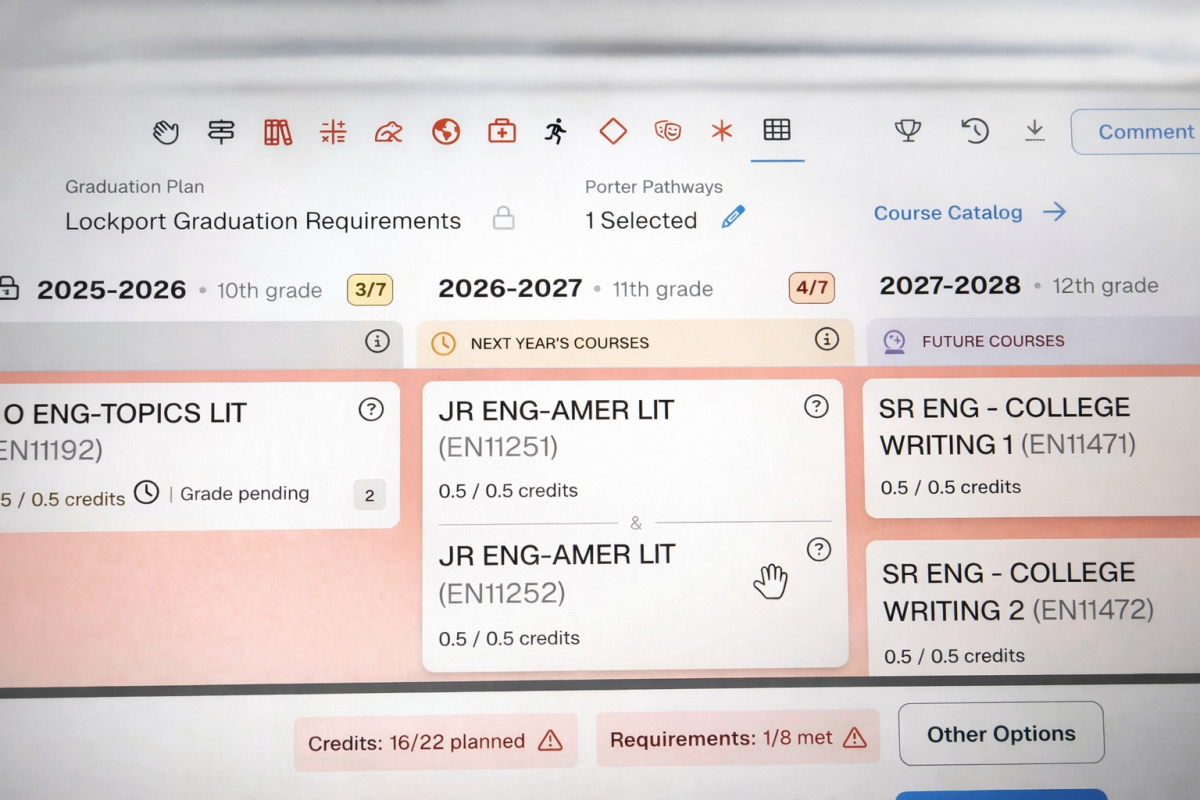
As course registration season approaches, more high school students are questioning whether four years of English should remain a graduation requirement. While most agree that English classes are essential early in high school, critics argue that the full four-year mandate does not always align with students’ academic goals, career interests, or postsecondary plans.
“By junior and senior year, a lot of English classes start to feel repetitive,” said Kacper Sikon, a current senior. “We’re analyzing the same types of texts in similar ways, instead of learning skills that directly connect to what we want to do after high school.”
In many districts, students are required to take English every year, regardless of whether they plan to study engineering, business, healthcare, skilled trades, or something else after graduation. Students argue that this lack of flexibility limits their ability to explore electives, earn dual credit, or take advanced courses in areas that better match their futures. For upperclassmen especially, schedules can become crowded, forcing them to choose between required English classes and opportunities like internships, AP science courses, or career and technical education programs.
Supporters of changing the requirement emphasize that the issue is not about eliminating English instruction. Instead, they argue for modernizing what counts as English credit. Courses such as journalism, public speaking, debate, technical writing, media studies, or college-level composition could still strengthen reading, writing, and communication skills while being more practical and engaging. Many colleges already accept a wide range of English-related coursework, which supporters say proves flexibility can work without lowering standards.
Students pursuing STEM fields often point out that they already demonstrate literacy through lab reports, research papers and presentations. Others interested in business or trades say real-world communication, such as professional writing, contracts or workplace communication, is rarely emphasized in traditional literature-focused classes. They argue that allowing alternatives would better prepare students for adult responsibilities rather than repeating similar literary analyses each year.
Opponents of reform argue that English classes play a crucial role in developing critical thinking, reading comprehension, and analytical writing skills that apply across all disciplines. They worry that reducing requirements could widen academic gaps or allow some students to avoid challenging coursework. However, students at LTHS who are pursuing non-English majors respond that offering choice does not mean lowering expectations, but rather holding students to the same skill standards through different formats.
As schools across the country reconsider graduation requirements to better reflect a changing workforce and higher education system, the debate over four years of English highlights a broader issue: how to balance foundational learning with individual readiness. Giving students more control over their final years of high school could lead to greater engagement, stronger preparation, and a system that values both literacy and relevance.