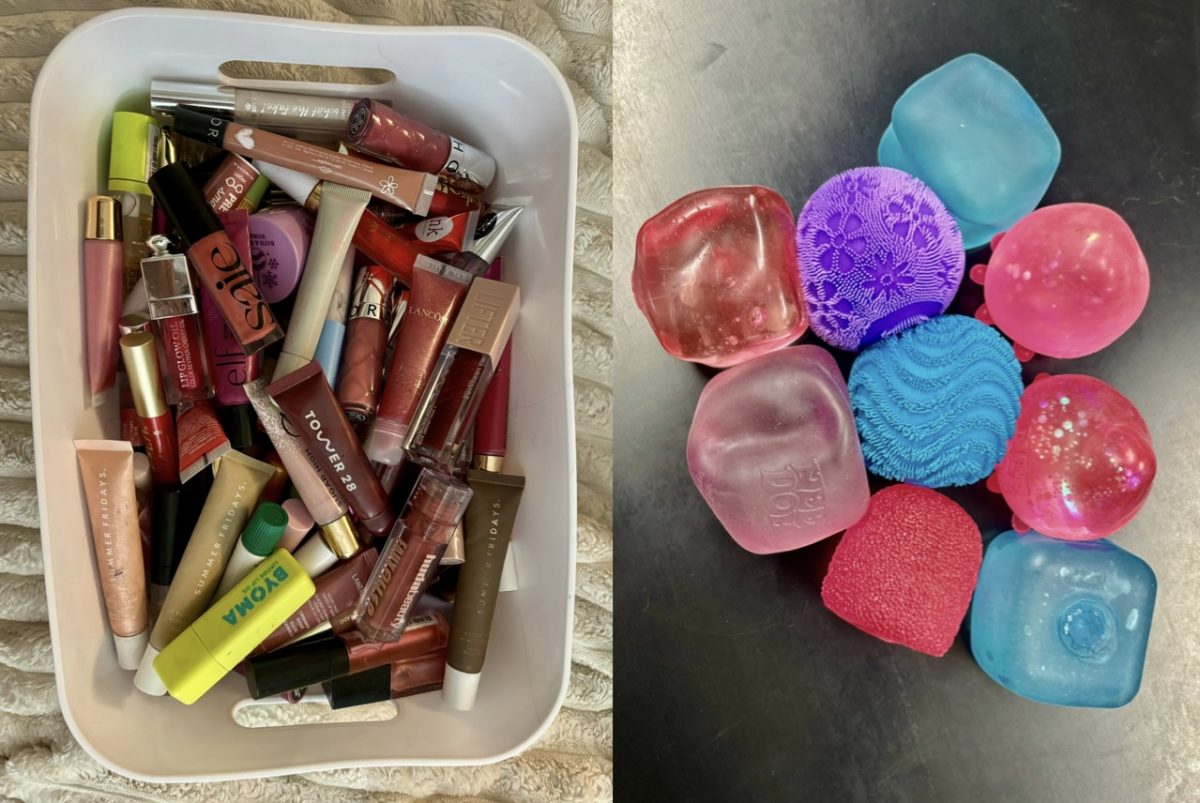
Imagine walking through the halls during the passing period. Certain items appear again and again: a bright squishy ball in someone’s hand, a giant metal water bottle tucked into a backpack sleeve, new outfits, fresh makeup, smelling the same fragrance of perfume. None of these things are inherently bad by themselves, but together they show how quickly trends spread and how much consumerism shapes daily life at our school.
One of the clearest examples is the recent explosion of fidget toys, specifically NeeDohs, a popular brand of squishy stress balls. What started as a simple tool for stress relief has quickly turned into collectible trends. They come in different colors, textures, limited editions and even themed designs like the viral “glitter dumpling” squishies that flood TikTok “for you” pages.
In those videos, creators tear them open, hoping for the “special glitter dumpling”, screaming with excitement when they get a rare one. That same energy shows up in school. In fact, as I’m writing this, students in front of me are passing NeeDohs back and forth, comparing textures and colors like trading cards and arguing which one is the best.
In many of my classes, my friends bring new ones almost every day, showing them off to the others and constantly fidgeting with them, even when not necessary. Specifically, my friend Gianna Palumbo told my other friend and me that the store was restocking NeeDohs early in the morning. She went in shortly after they opened to grab the newest ones, not just for herself, but for friends too. What makes these specific fidgets interesting isn’t that they exist, but how quickly they shift from being helpful stress relievers to being something students collect, compare and sometimes feel like they need before they sell out.
Ironically, an item designed to reduce stress can end up creating a different kind of pressure. The pressure to keep up, to have the newest one, or to avoid feeling left out, ultimately causing more stress than it relieves.
Water bottles tell a similar story. Whether it’s a Stanley, Owala, Hydro Flask or HydroJug, the brand someone carries can start to feel like part of their identity. At school, it’s rarely just about having a water bottle; it’s about which one you have. The logo is visible, the colors are recognizable and certain brands seem to rotate in and out of popularity, almost like fashion trends.
Many students own multiple bottles even if they mainly use one. I’m guilty of this too; I own all of the above and while I’ve used each of them, I usually stick to one or two. The bottles themselves are practical, but the brand attached to them often carries more meaning than people realize. When a certain bottle becomes the “it” item, it can subtly signal belonging, style or even status. And when everyone seems to have the same one, it becomes harder not to want it too.
Clothing trends might be the fastest-moving of all. Online retailers like Shein make it easy to buy large amounts of new pieces for low prices, while brands such as Hollister, Brandy Melville, Garage and Aerie remain recognizable staples in many closets. But beyond brand loyalty, fashion has recently been driven by “microtrends” like bows, polka dots, camo and other patterns that seem to take over for a few months before disappearing just as quickly.
Entire collections are released around these aesthetics; students buy into them and then the trend fades. Social media accelerates the cycle, making outfits feel outdated after only a handful of wears. In this environment, shopping becomes less about replacing what’s worn out and more about keeping up with what’s current.
At the same time, the logo on the tag still matters. Certain brands carry social weight, signaling style, trend awareness or belonging. The result is a cycle where both the speed of trends and the power of branding encourage students to refresh their closets more often than they might actually need to. And while it may feel normal, constantly replacing clothes simply because a trend shifted doesn’t seem necessary, especially when most of what we already own is still perfectly wearable. Sometimes it feels like we’re chasing change just for the sake of it, rather than dressing in ways that actually reflect who we are.
Beauty and hygiene products follow a similar pattern. A new lip gloss, perfume, or skincare item can go viral overnight, and suddenly everyone wants to try it. Social media makes these products feel urgent, as if they need to be bought before the trend passes. Many students admit they own far more than they could realistically finish. I’m guilty of this, too. I probably own over 100 lip products, far more than I actually need.
While certain brands and aesthetics may help spark interest, the larger pattern is how quickly one product turns into several. Buying something new can feel exciting, even when the one at home works just fine. Over time, that excitement adds up, turning everyday items into collections.
Part of why buying can feel so satisfying and so hard to resist is rooted in how our brains are wired to value rewards. Researchers explain that consumption activates the brain’s reward systems, including areas rich in dopamine, which guide motivation and decision-making around purchases. Studies in neuroeconomics show that dopamine responds not just to the pleasure of acquiring something, but to the anticipation and pursuit of rewards, making repeated consumerism feel exciting and reinforcing the behavior over time. This neurological feedback loop helps explain why one item can quickly turn into many, even when the original wasn’t truly needed.
In a community where people are still figuring out who they are, it makes sense that what we buy becomes part of how we present ourselves. Trends can create connection and shared interest, but they can also create pressure to spend more, to keep up, and to avoid feeling “left behind”.
Maybe the question isn’t whether these things are good or bad. Maybe it’s whether we’re choosing them intentionally or simply because it feels like we’re supposed to. And if we feel this; are we really developing who we are if media is driving our decisions?